English
Prices without taxes.
Enseña este producto a quien tú quieras.
Coating with concrete tiles
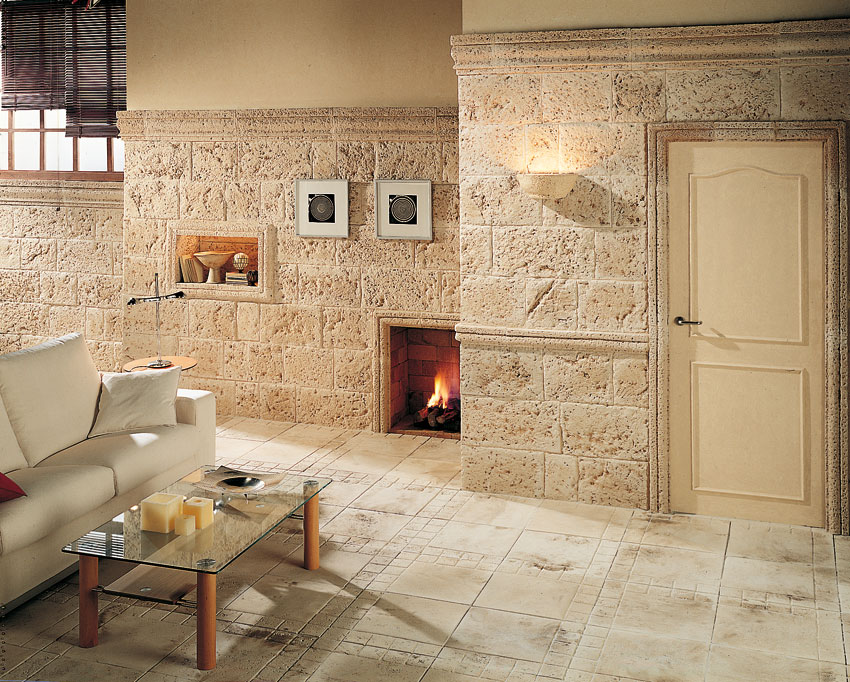
What are concrete tiles?
Prefabricated concrete cladding tiles are essential in any home that we want to differentiate from traditional paint.
They are perfect for indoor and outdoor use, as they are prefabricated concrete cladding, they withstand the sun and rain without being affected by wear and tear on material or colour.
The Verniprens coatings are designed in a special type of concrete to handle and give them different types such as brick tiles, stone tiles and wooden tiles.
All precast concrete tiles have an additive that is a moisture repellent to protect it from rain and adverse weather conditions.
What coating options do I have?
When choosing your prefabricated concrete tile you have the option of choosing between:
- Brick imitation.
- Wood imitation.
- Imitation stone.
We explain below the different types and descriptions of their characteristics.
Imitation brick
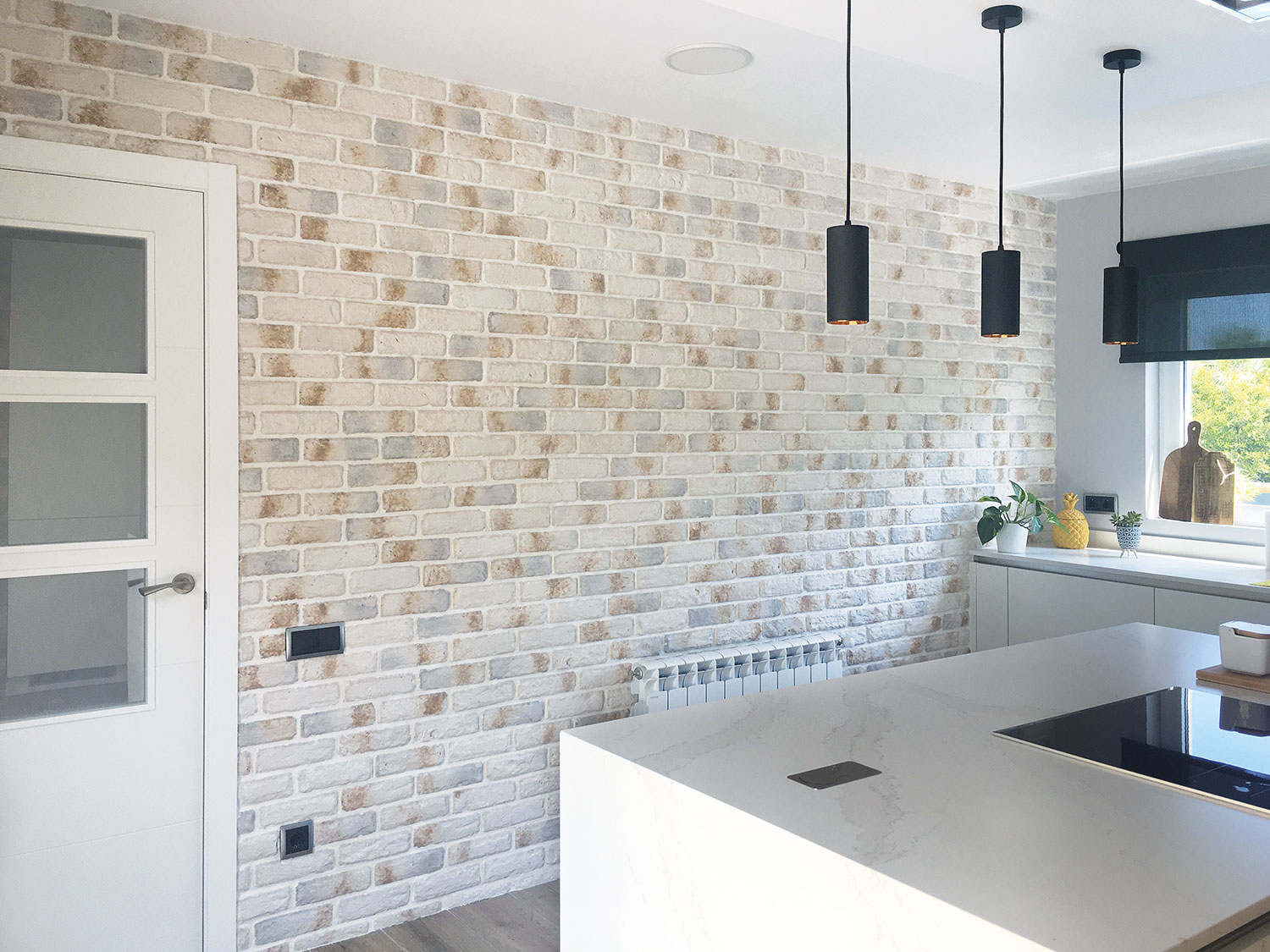
The brick-like tiles plagiarize the atmosphere of old buildings, industrial buildings or Mediterranean architecture. The color palette is based on brick colors offering the diversity of its structures.
Tiles go well with minimalist and rustic interiors or exteriors.
Lightened concrete cladding will be suitable for facades or interiors.
The characteristic of the brick imitation panels is that each assembly is unique. The use of these on the façade and interior tends to give a natural, spacious and bright style.
Imitation stone
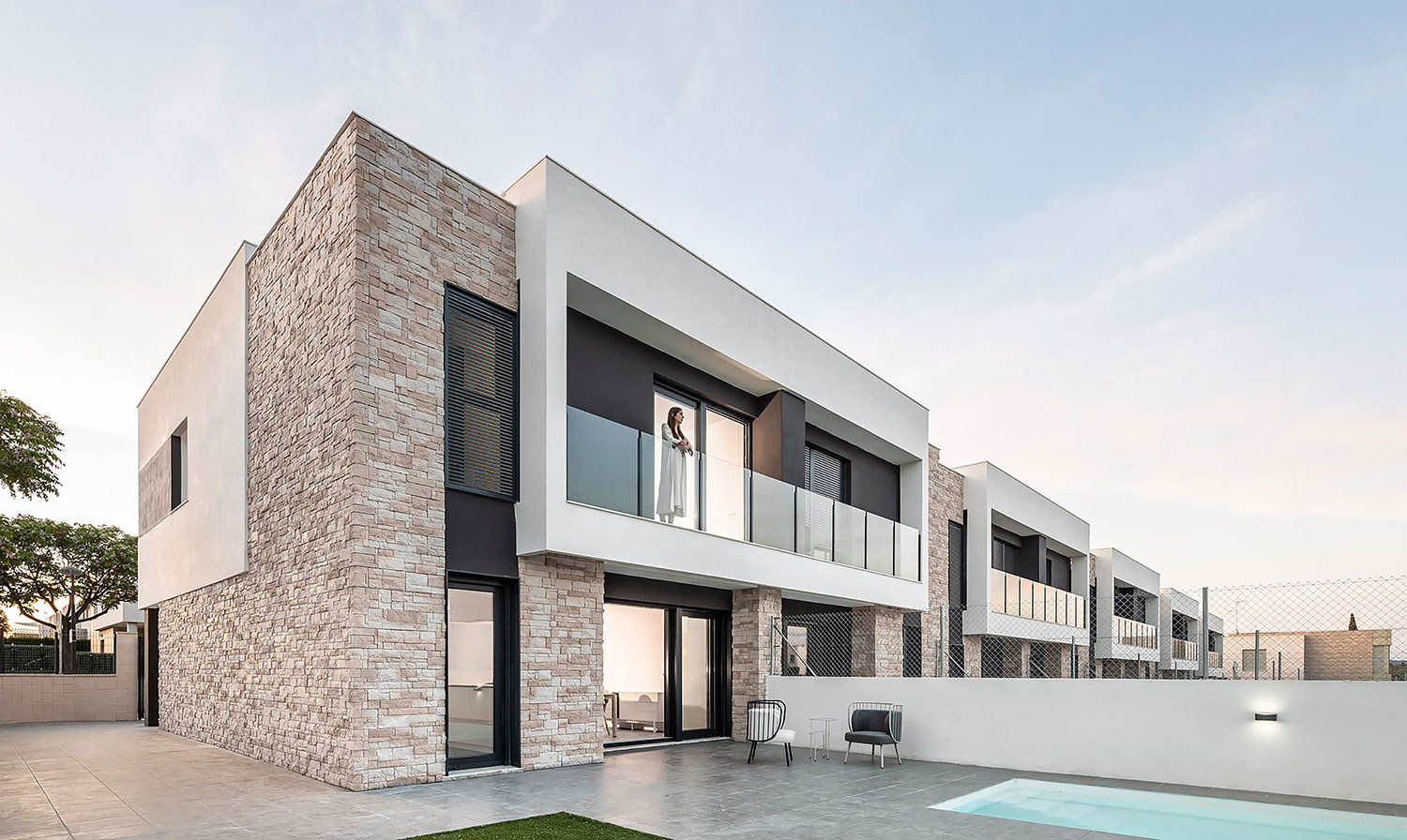
Prefabricated stone tiles are artificial products used to cover facades, interior walls, columns and other architectural elements.
They are made of concrete and are manufactured with shapes and textures that imitate the appearance of natural stone, as well as having additives that make them resistant to both weather and wear.
Prefabricated stone imitation concrete tiles are available in a wide range of colours, shapes and textures, thanks to this it is possible to adapt in a large number of places.
It is a great option if you are looking for something durable and resistant to weather changes, it also does not need frequent maintenance, and they are very easy to clean.
The characteristics of this prefabricated imitation stone is that it is a unique and excellent product of nature, in addition to the fact that the colors of the stone reflect light and give an environment similar to that of nature.
This type of prefabricated is ideal for use around your home or even as a decorative element for your garden.
In summary, prefabricated stone imitation concrete tiles are a popular and versatile option for cladding facades and interior walls and offer an affordable and durable alternative to natural stone.
Imitation wood
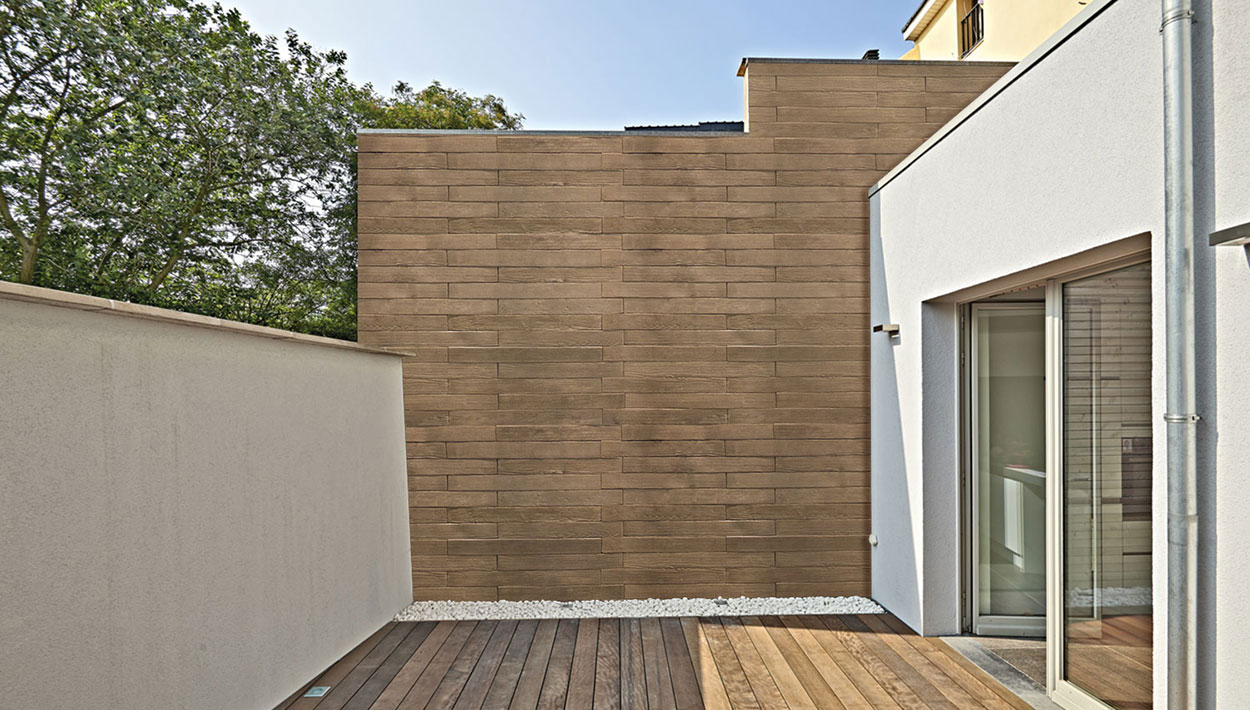
Prefabricated imitation wood concrete tiles are artificial products that are used to cover facades, interior walls, terraces and other architectural elements.
They are made of concrete and are manufactured with shapes and textures that mimic the appearance of natural wood.
Some of the advantages of prefabricated concrete tiles with imitation wood are:
- More durable and resistant than natural wood, and are not affected by humidity or weather changes
- More economical than natural wood and offers an alternative for wood cladding projects.
- Each assembly is unique, it is easy to maintain and clean.
- They are available in a wide range of colors and textures, allowing them to be adapted to different styles and designs.
In summary, prefabricated wood-effect concrete tiles are a popular and versatile choice for cladding facades and interior walls and offer an affordable and durable alternative to natural wood.
Frequently asked questions
Las plaquetas de hormigón son un tipo de revestimiento construido con hormigón. Tienen una gran variedad de acabados: imitación piedra. imitación madera e imitación ladrillo.
Tienen una gran versatilidad de instalación ya que permite elegir que separación habrá entre cada plaqueta. Gracias al material del que están fabricadas poseen un alto nivel de resistencia a las inclemencias del tiempo, siendo de esta manera muy recomendables para su instalación en fachadas, jardines, patios y terrazas.
- Comprobar la superficie de instalación. Debe estar limpia y sin pintar.
- Desde abajo comenzamos a aplicar el cemento cola con una llana dentanada.
- Se encola la pieza también, por la parte interior , y se coloca sobre la pared.
- Con una maza de goma se golpea con suavidad la pieza para asentar el adhesivo.
- Cada instalación es única, coloca las piezas como más te guste.
- Una vez transcurridos los tiempos de secado, podemos aplicar el rejuntado.
- Una vez secado el rejuntado, procedemos a darle un aspecto más atractivo con un llaguero.
- Para finalizar, se repasan las juntas con un cepillo o brocha para eliminar el exceso de mortero.